What the data says about construction, risk, and growth.

Henry Keppler
What the data says about construction, risk, and growth.
Related Insights
Article
The problem with static property records
Most underwriters rely on the same core inputs: MLS data, prior inspection reports, and historical claims. The problem? These records are snapshots. They reflect what was true at one point in time not what's true today.
A property can be renovated, expanded, converted, or significantly altered and none of that shows up in your risk model until something goes wrong. By then, it's a claim.
Permit data closes that gap.
What permit data actually tells you
A permit is a legally documented record of work that was submitted to — and approved by, a local building authority. When a homeowner adds a second story, installs a new roof system, replaces an electrical panel, or builds an accessory dwelling unit, a permit gets filed.
That permit creates a paper trail. It records:
- The type of work (structural, electrical, plumbing, HVAC, addition, etc.)
- The date the work was submitted, approved, and inspected
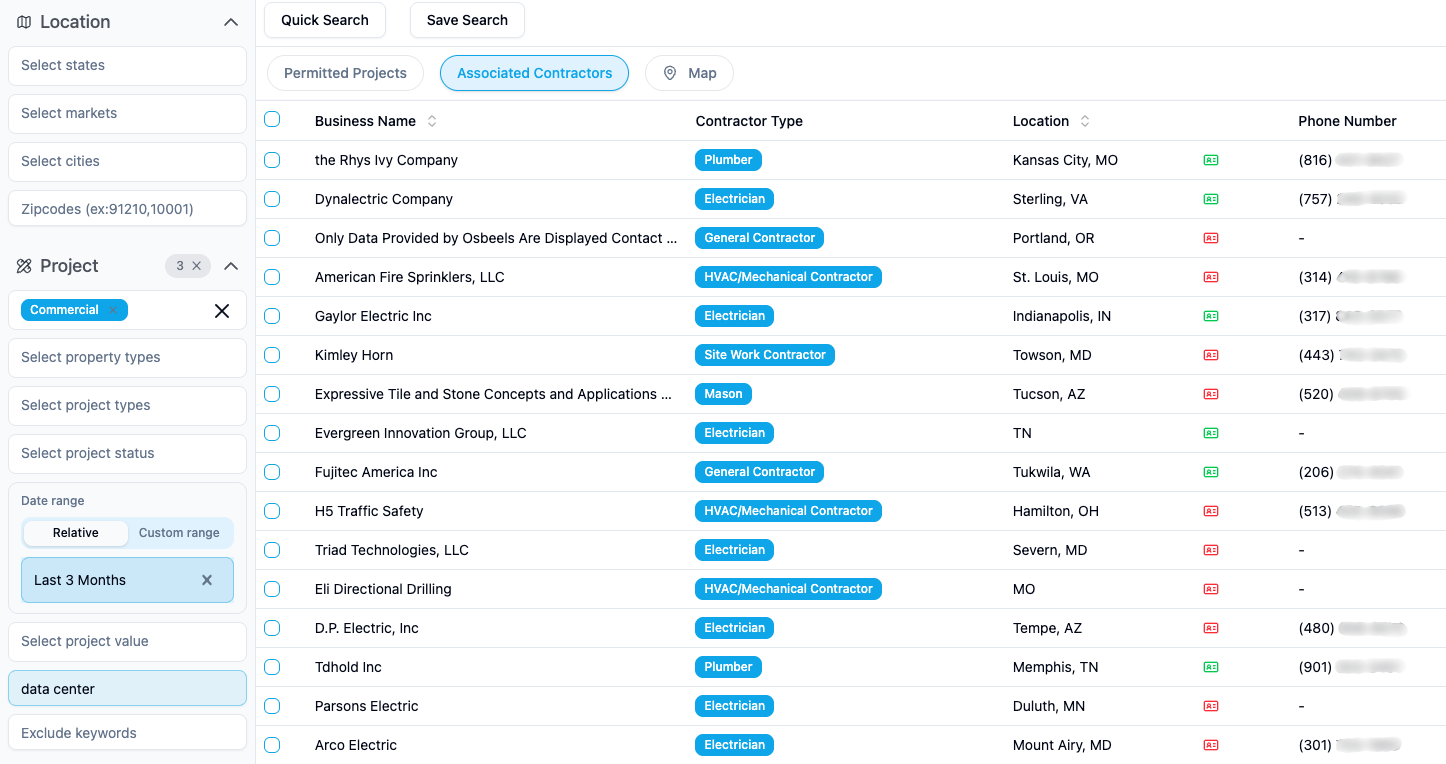
- The contractor performing the work (often with license number)
- The estimated project value
- Whether the permit was finaled or left open
For underwriters, this is significantly more signal than "no known changes" in a property database.
What it doesn't catch and why that matters too
Permit data is not a complete record of all construction activity. Unpermitted work exists — renovations done without filing, work in jurisdictions with low enforcement, or jobs that were started and never closed out.
That's actually part of the value. When you're looking at a property that shows significant renovation activity (based on tax records, appraisal notes, or listed photos) but zero corresponding permits, that's a flag. It's not proof of fraud — but it's a meaningful data point worth investigating.
The absence of a permit, in the right context, is signal just as much as the presence of one.
How underwriting teams are using this data today
Risk teams at insurance carriers are integrating permit data in several ways:
At submission: Running a permit lookup as part of the initial triage. Properties with recent structural permits, open permits, or unpermitted renovation flags get flagged for additional review.
At renewal: Checking for permit activity since the last policy was written. A major renovation that wasn't reported — or a change in property use — can materially affect risk exposure.
For high-value properties: For commercial or high-value residential, permit history is increasingly part of the standard pre-underwriting package alongside inspection reports.
In claims: Adjusters use permit history to determine whether a claim involves work that was done legally, by a licensed contractor, with proper inspection — or not.
The coverage problem
One challenge with permit data has always been fragmentation. There are over 2,400 building departments in the US. Each one maintains records differently. Some jurisdictions have digital lookup systems. Others still operate on paper or use proprietary databases that haven't been updated since 2004.
That's the problem Gryd solves. Our dataset covers 360M+ building permits across 2,400+ jurisdictions, updated with 1.3M+ new records per week — normalized into a single consistent schema so your team isn't manually reconciling county PDFs.
For underwriting workflows specifically, the data is accessible via API for direct system integration, or as bulk delivery for model building and portfolio analysis.
"A property can be significantly altered and none of that shows up in your risk model until something goes wrong. Permit data closes that gap."
Resources
- New York Federal Reserve: Repo and Reverse Repo Agreements
- New York Federal Reserve: Key Mechanics of the U.S. Tri-Party Repo Market
- New York Federal Reserve: The $12 Trillion US Repo Market: Evidence from a Novel Panel of Intermediaries
- DTCC: DTCC Announces New Platform for Tokenized Real-time Collateral Management
- KPMG: T+1 Settlement
- European Central Bank: Glossary
- Chainlink: How Atomic Settlement Enables Onchain DvP
- Business Wire: The Canton Network Completes the Most Comprehensive Blockchain Pilot to Date for Tokenized Real World Assets
- Canton: DTCC and Digital Asset Complete Successful Pilot to Test Collateral and Margin Optimization through Tokenization
- Tradeweb: Digital Asset and Industry Working Group Complete Groundbreaking On-Chain US Treasury Financing on Canton Network
Ready to use verified construction intelligence in your industry?
Tell us what your team needs to understand, which markets matter, and how you want to use Gryd data. We’ll help you find the right path.