Build better products with verified construction intelligence.

Gryd by BuildZoom Data helps construction tech, property tech, software, AI, and data platform teams bring permit, property, contractor, license, and project activity data into the products and workflows they already build. Use Gryd to enrich platforms, power models, automate checks, verify activity, and give users a clearer view of what is happening across properties, contractors, projects, and markets.
[ building permits ]
380M+
[ contractors ]
6M+
[ jurisdictions ]
2,500+
[ contractor license boards ]
450+
Your product is only as strong as the data layer behind it.
Construction and property technology products need reliable signals to help users make decisions. But permit, contractor, property, license, and project data is hard to collect, clean, normalize, and keep current across markets. Building that infrastructure in-house can pull product and engineering teams away from the work that actually makes the product better.
Gryd gives technology teams a cleaner way to build on verified construction data without starting from fragmented local records.
Public records are hard to productize
Permit and contractor data comes from many local sources with different formats, fields, and update schedules.
Internal data pipelines take time to maintain
Collecting, cleaning, matching, and updating construction data can become its own ongoing engineering burden.
Users expect better context
Property, contractor, project, and market workflows are more useful when construction activity is connected to the record they are viewing.
AI and automation need better inputs
Models, agents, scoring systems, and automated workflows need structured data they can actually use.
Use Gryd as the construction intelligence layer behind your product.
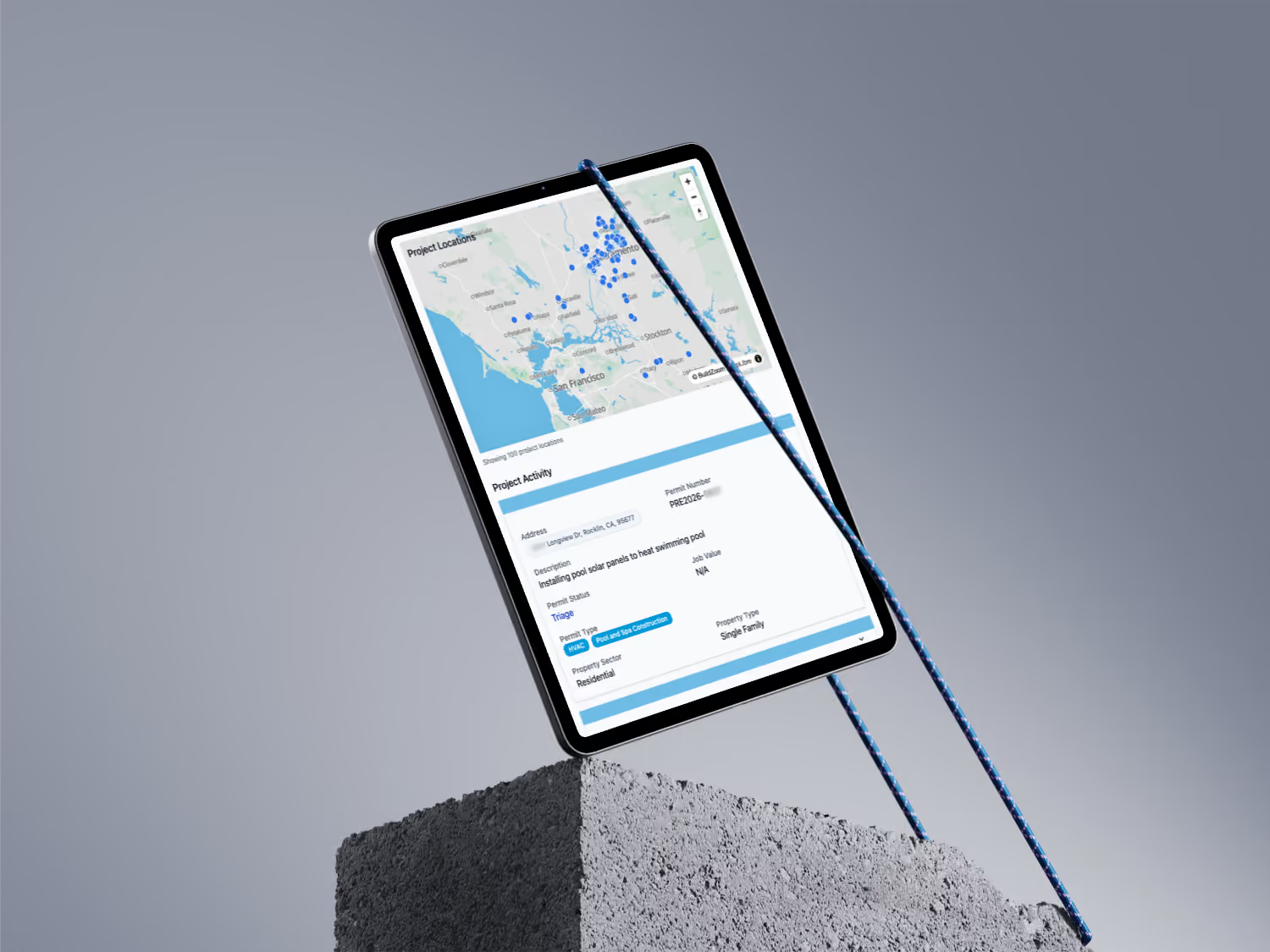
Gryd helps technology teams add verified construction signals to platforms, models, workflows, dashboards, AI tools, and internal systems.

/
Enrich property experiences
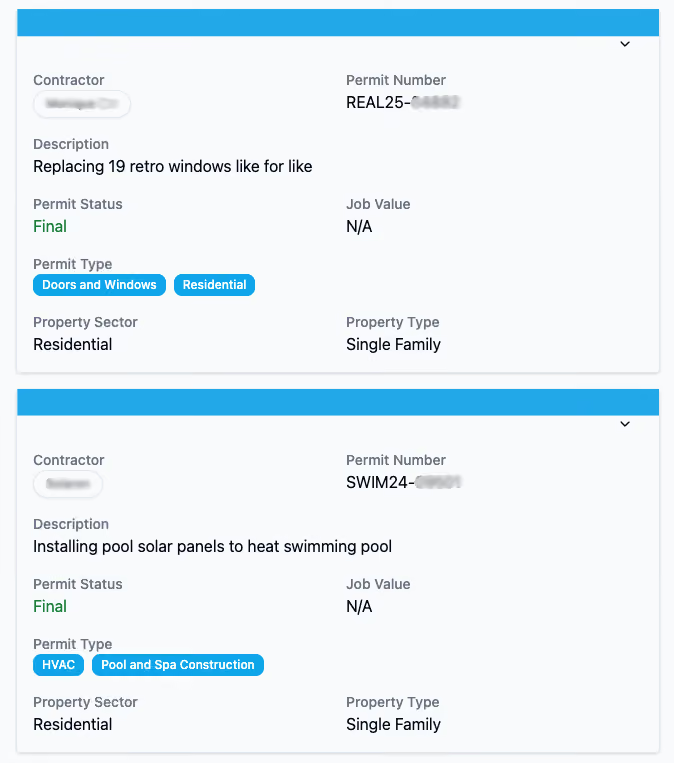
Add permit history, improvement activity, project details, contractor signals, and construction context to property profiles or user workflows.
/
Power contractor intelligence
Use contractor records, permit activity, license-related signals, project history, and market presence to strengthen contractor profiles or verification tools.
/
Build smarter models
Bring permit velocity, project status, contractor behavior, property changes, and market activity into scoring, forecasting, and analytics workflows.
/
Automate manual checks
Use Gryd data to support repeatable checks around properties, contractors, permits, projects, markets, or jurisdictions.
/
Add market intelligence
Show users where construction activity is increasing, which project types are moving, and how markets are changing over time.
/
Reduce data infrastructure burden
Build on top of normalized construction data instead of maintaining every source, format, update, and jurisdiction relationship yourself.
Give your users better construction and property context.

Stronger product experiences
Add useful construction signals where users already review properties, contractors, projects, or markets.
Faster product development
Spend less time building and maintaining data infrastructure from scratch.
Better automation
Use structured construction data to support repeatable workflows, AI agents, scoring, routing, and decision logic.
More differentiated data products
Build around verified construction activity that many standard property or business datasets do not include.
Construction signals your product can build on.
Past and recent permit activity tied to properties, contractors, project types, locations, and dates.
Contractor records, permit volume, project history, market presence, and license-related signals where available.
Renovations, additions, repairs, roof work, solar installs, HVAC, electrical, plumbing, and other improvement activity.
Available project descriptions, status, timing, location, job value, contractor, and related activity.
Permit velocity, project type trends, contractor concentration, and construction movement across markets.
Structured data from local sources where construction activity is documented, approved, and updated.
Ways technology teams use Gryd
/
Contractor Verification
Review contractor activity, permit history, license-related signals, project records, and market presence.
/
Analysis & Data Modeling
Add permit, property, contractor, license, and project signals to models, dashboards, forecasts, reports, and analytics workflows.
/
Nationwide Permit Coverage
Access broad permit activity across markets and jurisdictions without relying on local searches one by one.
/
Construction Activity Monitoring
Track recent permit activity, project updates, contractor movement, property improvements, and market changes over time.
/
Technology Integration
Bring verified construction intelligence into products, platforms, workflows, dashboards, AI tools, and internal systems.
Use Gryd in the way your team works
Some teams need a searchable platform. Others need data connected to their systems. Others need large-scale files for analysis, modeling, or research. Gryd gives teams flexible ways to access verified construction intelligence.
Explorer
Search, filter, and monitor permit, property, contractor, and project activity through a web-based platform.
API
Connect Gryd data to your product, platform, model, dashboard, workflow, or internal system.
Bulk Data
Receive large-scale construction, permit, property, and contractor data for analysis, reporting, modeling, or research.
Verified construction data without building the whole data layer yourself.
Gryd helps technology teams avoid the work of stitching together fragmented construction records from many local sources. The data is aggregated, cleaned, normalized, and structured so teams can use it inside products, platforms, models, and workflows.
That means your team can focus less on maintaining raw data pipelines and more on building the product experience your users need.
Ready to build on verified construction intelligence?
Tell us what you're building, which data signals matter, and how your team wants to use Gryd. We'll help you find the right access path.
Construction & Property Technology FAQs
№
Question
Answer
How can Gryd support construction tech or PropTech products?
Gryd can provide permit, property, contractor, license, and project activity data that teams can use to enrich products, automate workflows, power models, or support customer-facing features.
Can Gryd data be used inside our own platform?
Yes. API Access can help teams connect Gryd data into platforms, products, workflows, dashboards, models, and internal systems.
Can Gryd support AI or automation workflows?
Yes. Gryd data can support AI tools, agents, scoring systems, routing workflows, and automated checks that depend on structured construction, property, contractor, or permit activity.
Is this different from the Real Estate & PropTech page?
Yes. The Real Estate & PropTech page focuses more on real estate intelligence and property market use cases. This page focuses on technology companies building products, platforms, workflows, AI tools, or data systems with Gryd as an underlying data layer.
Can we use bulk data instead of the API?
Yes. Bulk Data Delivery is a good fit when your team needs large datasets for analysis, enrichment, modeling, research, or data warehouse use.
Can we explore the data before integrating it?
Yes. Data Explorer can help teams review the data directly before deciding whether to use API Access or Bulk Data Delivery.