Bring verified construction intelligence into the systems your team already uses.
Gryd API helps teams connect permit, property, contractor, license, and project activity data into products, platforms, models, dashboards, and internal workflows. Use it to automate checks, enrich systems, power analytics, verify activity, and build on top of jurisdiction-verified construction data.
Your systems are only as useful as the data behind them.
Teams are already making decisions inside underwriting tools, lending workflows, CRMs, analytics platforms, risk models, data lakes, and customer-facing products. The problem is that construction activity data is hard to collect and keep current on your own. Permit records, contractor data, license signals, property changes, and project details are spread across local sources with different formats and update schedules. Gryd API gives teams a cleaner way to bring verified construction intelligence directly into the systems where decisions already happen.
Public data is hard to maintain
Building your own permit and contractor data pipeline means dealing with thousands of local sources, inconsistent formats, and changing records.
Manual lookups do not scale
Teams cannot rely on one-off searches when the workflow needs to support portfolios, platforms, models, or customer-facing products.
Models need better signals
Risk, growth, verification, and market models become stronger when they can use documented construction activity and contractor signals.
Product teams need reliable inputs
If construction intelligence powers your product or workflow, the data needs to be structured, current, and ready to use.
Connect Gryd data to the tools, models, and workflows that run your business.
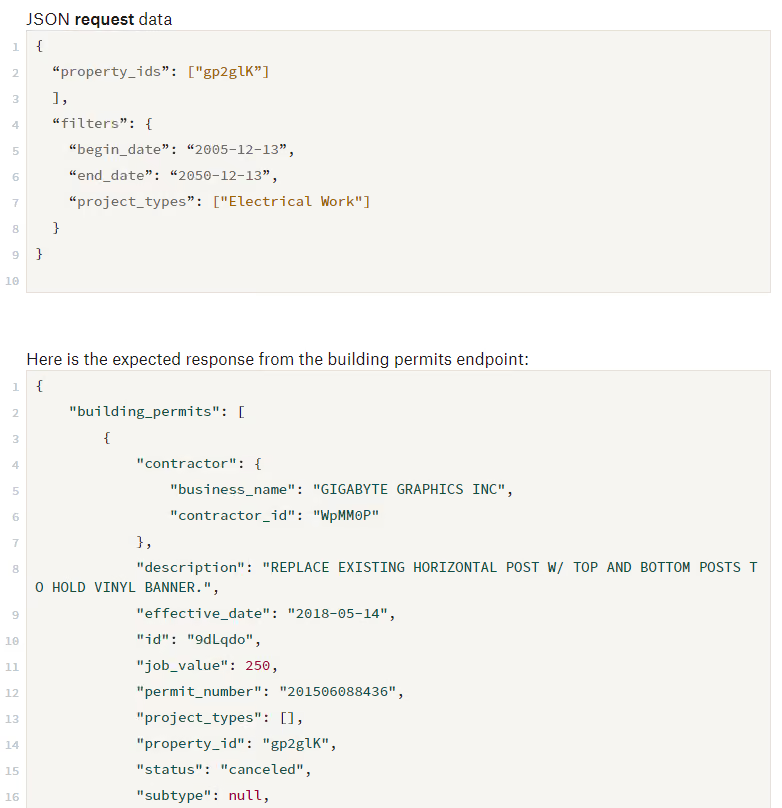
Our API helps teams use Gryd data programmatically, so construction intelligence can support repeatable decisions, automated checks, product features, and internal systems.

Enrich property records
Add permit history, project activity, improvement signals, and contractor details to property profiles or internal databases.
Verify contractors and businesses
Use contractor activity, license-related signals, permit history, and market presence to support KYB, underwriting, lending, and platform workflows.
Power risk workflows
Bring construction activity signals into underwriting, renewal, portfolio review, claims, fraud, or property risk processes.
Support models and scoring
Feed permit velocity, contractor concentration, project status, property changes, and market activity into models and analytics workflows.
Automate manual checks
Replace one-off permit searches or contractor lookups with repeatable API-driven workflows.
Build data-driven products
Use Gryd data inside customer-facing platforms, software products, AI tools, property intelligence systems, or construction technology workflows.
Our API is best for teams that need Gryd data inside their own systems.
Gryd API is the right fit when your team wants construction intelligence to become part of an existing product, platform, workflow, data pipeline, or decision system.
Gryd API is a good fit if your team wants to:
Make construction intelligence part of the way your team works.
Our API lets teams connect Gryd's permit, property, contractor, license, and project activity data into their own systems, products, platforms, models, or workflows.

Reduce manual research
Automate data access instead of asking teams to search local sources one record at a time.
Build on verified signals
Use jurisdiction-backed permit activity, contractor records, license signals, and project details instead of incomplete or stale data.
Strengthen models and workflows
Add construction activity context to the systems your team already uses to score, route, monitor, or decide.
Scale data use across teams
Use one structured source of construction intelligence across products, analytics, operations, risk, sales, or research workflows.
Ways teams use Gryd API
Property Risk Intelligence
Use permit history, property changes, contractor activity, and project records to understand how a property has changed over time.
Contractor Verification
Review contractor activity, permit history, license-related signals, project records, and market presence.
Analysis & Data Modeling
Add permit, property, contractor, license, and project signals to models, dashboards, forecasts, reports, and analytics workflows.
Nationwide Permit Coverage
Access broad permit activity across markets and jurisdictions without relying on local searches one by one.
Technology Integration
Bring verified construction intelligence into products, platforms, workflows, dashboards, AI tools, and internal systems.
Built for teams that need construction data to work inside their own environment.

Insurance & Underwriting
See property changes, permit history, contractor activity, and improvement signals that can support better underwriting, renewal, and risk decisions.

Financial Services & Lending
Verify contractor activity, support KYB workflows, monitor construction loans, and add property context to lending decisions.

Real Estate and Property Tech
Use permit and property activity to enrich platforms, understand market movement, and build stronger property intelligence.

Construction & Building Supplies
Find active projects, high-volume contractors, growing territories, and construction activity your sales or market team can act on.

Construction Technology
Build products, workflows, AI tools, and platforms on top of normalized construction, permit, property, and contractor data.

Research & Academia
Analyze national construction activity, housing trends, energy adoption, permitting patterns, and long-term market changes.

Telecommunications
Identify buildout opportunities, support site acquisition, monitor competitive activity, and protect infrastructure with verified construction data.

Energy & Utilities
Assess solar installation feasibility, track technology adoption, and support certification and research with verified property data.
Not sure if Gryd API is the right path?
Our API is best when your team wants Gryd data connected to your own systems. If your team needs to search directly or work with large files in your own analytics environment, check out our Explorer or Bulk Data solutions.
Access Path
Best For
Common Uses
Explorer
Searching and reviewing data directly
Property lookups, contractor review, permit history, project research, market monitoring
API
Connecting data into systems
Product enrichment, workflow automation, contractor checks, risk models, internal tools
Bulk Data
Large-scale data analysis
Large-scale data analysis
API FAQs
Question
Answer
What is Gryd API?
API lets teams connect Gryd's permit, property, contractor, license, and project activity data into their own systems, products, platforms, models, or workflows.
Who is API best for?
API is best for technical, product, data, analytics, and operations teams that need repeatable access to Gryd data inside their own environment.
Can API support contractor verification?
Yes. Teams can use contractor records, permit activity, project history, license-related signals, and market presence to support contractor verification workflows.
Can API support property risk workflows?
Yes. Teams can bring permit history, property changes, contractor activity, and project details into underwriting, lending, claims, portfolio review, or risk models.
Is API the same as Explorer?
No. Gryd Explorer is a web-based platform for direct search and review. API is for connecting Gryd data into your own systems and workflows.
Can we start with Explorer before using API?
Yes. Some teams start with Explorer to understand the data, then move to API when they are ready to connect Gryd data into a system or workflow.
Ready to connect Gryd data to your systems?
Tell us what you’re building, which data signals matter, and how your team wants to use Gryd. We’ll help you understand whether API is the right fit.