Use verified construction data to plan and protect fiber and network buildouts.

Gryd by BuildZoom Data helps telecom and network infrastructure teams use permit, property, contractor, and construction activity data to identify fiber and network buildout opportunities, support site acquisition, monitor competitive activity, and protect existing infrastructure.
Fiber and network buildouts get harder when construction activity is hard to see.
Telecom and infrastructure teams often need to know where new development is happening, whether a site is worth pursuing, and whether nearby construction could affect existing infrastructure. But that information is filed locally, one jurisdiction at a time, with no single place to see it all. This is especially true for providers building under federally funded programs like BEAD, which require documented construction progress tied to strict, audited milestones.
Gryd helps teams use verified construction records to see where building is happening, how fast it's moving, and how that activity connects to specific properties, contractors, and markets.
New construction is hard to track in real time
Residential, commercial, and industrial construction is filed across thousands of separate jurisdictions, making it difficult to spot new development before it's already underway.
Site acquisition research is manual and slow
Evaluating a location for a tower, small cell, or fiber route often means checking zoning, parcel, and permit records one source at a time.
Existing infrastructure is exposed to construction risk
Nearby digging, trenching, or new construction can damage buried lines or conflict with planned installations if it isn't caught early.
Competitive and market activity is difficult to monitor
Understanding where other carriers or providers are actively building requires piecing together permit activity across many markets at once.
Add verified construction activity to fiber and network planning workflows.
Gryd gives telecom and infrastructure teams a clearer way to identify buildout opportunities, support site acquisition, track construction near existing infrastructure, and monitor market and competitive activity.

Identify fiber and network buildout opportunities
Use new construction and permit data to find markets, subdivisions, and developments where infrastructure demand is emerging.
Support site acquisition
Use permit, property, and parcel context to evaluate candidate sites for towers, small cells, and fiber routes.
Protect existing infrastructure
Track nearby construction and permit activity that could affect buried lines, conduit, or planned installations.
Monitor competitive activity
See where construction and infrastructure-related permit activity is concentrated to understand where other providers may be active.
Prioritize markets by permitting speed
Use permit timing and status data to understand how quickly work tends to move through a given jurisdiction.
Reduce manual research
Replace jurisdiction-by-jurisdiction searches with a single, normalized source for construction and permit activity.
Certificate of Occupancy signals
See when new construction has passed final inspection and is ready for occupancy, a clear signal that a property is ready to be connected.
Make network planning decisions with clearer construction context.

Clearer buildout visibility
See new residential, commercial, and industrial construction as it's filed, rather than after it's already built.
Faster site acquisition
Use permit and property context to narrow candidate sites before committing time to on-the-ground research.

Reduced infrastructure risk
Track construction activity near existing lines and installations to help avoid damage and conflicts.
Sharper market prioritization
Use construction and permitting patterns to help decide where to deploy capital and crews first.
Construction signals that can support fiber and network planning workflows.
See where new residential, commercial, and industrial construction is being permitted, by market, jurisdiction, or project type.
Review property-level details that support site evaluation and buildout planning.
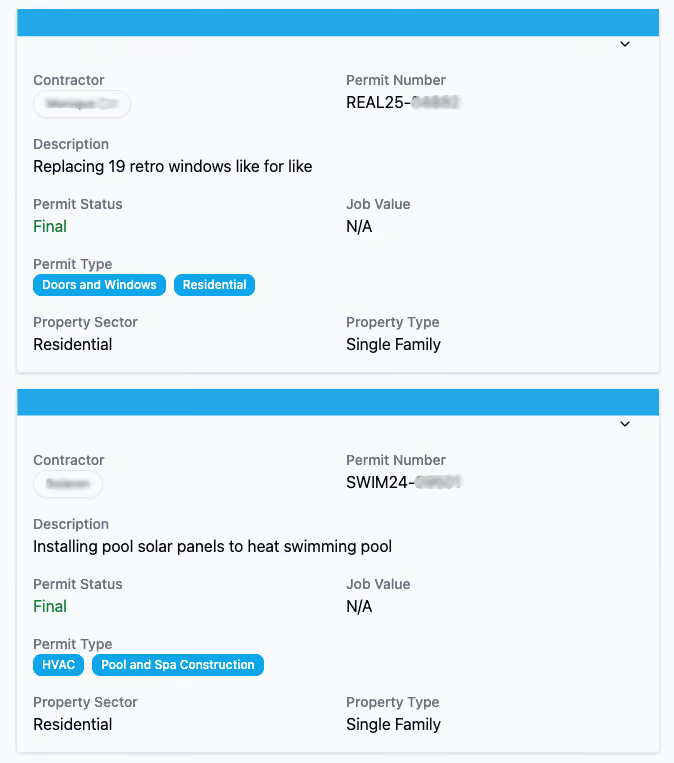
Use permit and project details to understand job type, location, timing, status, and value.
Track permit velocity and construction concentration across territories, metros, or specific jurisdictions.
Review applied, issued, completed, expired, cancelled, or updated permit activity where available.
See which contractors are active in a market and what kind of work they're pulling permits for.
Ways telecom and infrastructure teams use Gryd
Contractor Verification
Review contractor activity, permit history, license-related signals, project records, and market presence.
Analysis & Data Modeling
Add permit, property, contractor, license, and project signals to models, dashboards, forecasts, reports, and analytics workflows.
Nationwide Permit Coverage
Access broad permit activity across markets and jurisdictions without relying on local searches one by one.
Construction Activity Monitoring
Track recent permit activity, project updates, contractor movement, property improvements, and market changes over time.
Technology Integration
Bring verified construction intelligence into products, platforms, workflows, dashboards, AI tools, and internal systems.
Use Gryd in the way your team works
Some teams need a searchable platform. Others need data connected to their systems. Others need large-scale files for analysis, modeling, or research. Gryd gives teams flexible ways to access verified construction intelligence.
Explorer
Search, filter, and monitor permit, property, contractor, and project activity through a web-based platform.
API
Connect Gryd data to your product, platform, model, dashboard, workflow, or internal system.
Bulk Data
Receive large-scale construction, permit, property, and contractor data for analysis, reporting, modeling, or research.
Verified construction records can reveal buildout opportunity before it's visible elsewhere.
A filed permit can show that new construction is underway before a building is finished or occupied. Contractor records can show who is actively building in a market. Project history can show what kind of work is happening and where. Gryd brings those signals together so telecom and infrastructure teams can use construction activity as another layer of context in buildout planning, site acquisition, and market strategy.
Ready to add verified construction signals to your network planning?
Tell us what your team needs to identify, monitor, or plan around. We'll help you find the right way to use Gryd.
Telecommunications FAQs
Question
Answer
How can permit data help with network buildout planning?
Permit data can show where new residential, commercial, and industrial construction is happening, which can help teams identify buildout opportunities, prioritize markets, and plan infrastructure deployment with more visibility into where demand is emerging.
Can Gryd help with site acquisition for towers, small cells, or fiber routes?
Yes. Property, parcel, and permit data can help teams evaluate candidate sites and understand nearby construction activity before committing time and resources to a location.
Can Gryd help protect existing infrastructure from construction activity?
Gryd can help teams track permit and construction activity near existing lines, conduit, or planned installations, which can support coordination and help reduce the risk of damage or conflict.
Can Gryd help monitor competitive or market activity?
Yes. Permit and construction data can help teams see where activity is concentrated across markets, which can support both market entry and competitive analysis.
How current is Gryd's permit data?
Gryd by BuildZoom Data updates daily, processing approximately 70,000 new permits and 500,000 status updates per day. We do not publish trend or refresh-rate percentages; recency is described by this daily processing volume rather than an aggregate statistic.
Can telecom and infrastructure teams integrate Gryd data into internal systems?
Yes. API Access can bring Gryd data into GIS platforms, planning tools, dashboards, and internal systems.
Can Gryd support BEAD-funded broadband deployment reporting?
BEAD-funded providers must document construction progress against strict, audited milestones, with financial penalties for missed deadlines. Independent, jurisdiction-sourced permit records can support that documentation process, providing an objective record of construction activity alongside a provider's own reporting. For more information about BEAD requirements, read more here.