Analyze construction activity trends with accurate data.

Gryd by BuildZoom Data helps research and academic teams access structured permit, property, contractor, license, and project activity data for housing research, market analysis, policy studies, energy adoption research, and long-term construction trend analysis.
Research gets harder when construction records are scattered across local systems.
Construction activity can help researchers understand housing supply, permitting timelines, renovation trends, energy adoption, market development, and local economic change. But permit and contractor records are spread across thousands of local sources. Each jurisdiction may use different formats, fields, timelines, and update schedules.
Gryd helps research teams work from a cleaner, more structured view of construction activity, without needing to collect and normalize local records one source at a time.
Local records are fragmented
Permit and project data lives across many local systems, making broad research difficult to collect and compare.
Historical analysis needs depth
Research often needs years of activity, not just recent records or one-off local searches.
Markets are hard to compare
Different jurisdictions report different details, which makes cross-market analysis harder.
Research teams need usable data
Large-scale studies need structured data that can support analysis, modeling, reporting, and publication workflows.
Give research teams a structured view of construction activity.
Gryd helps research, academic, policy, and consulting teams study what was permitted, where activity happened, who was involved, and how construction patterns changed over time.

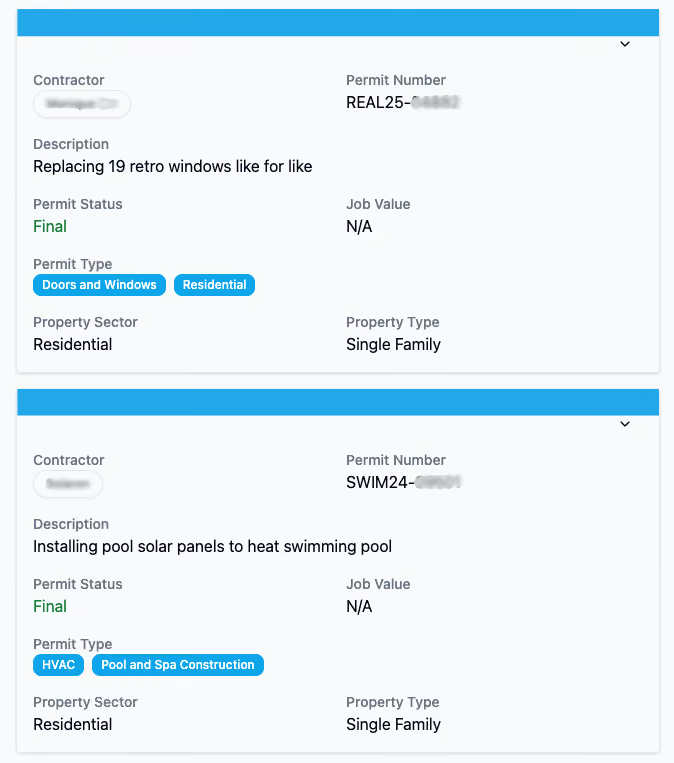
Analyze historical permit activity
Study construction, renovation, repair, solar, roofing, HVAC, electrical, plumbing, additions, and other permit activity across time.
Compare markets and jurisdictions
Review construction activity across states, counties, cities, jurisdictions, or high-density markets.
Study housing and development trends
Use permit and project records to analyze housing supply, improvement activity, permitting patterns, and local market change.
Research energy and infrastructure adoption
Track construction signals tied to solar, electrification, battery storage, HVAC, and other improvement categories where available.
Add contractor context
Use contractor records, license-related signals, permit activity, and project history to understand who is doing the work.
Support models and published research
Bring structured construction data into statistical models, dashboards, reports, academic projects, or consulting deliverables.
Spend less time collecting records and more time analyzing what they mean.

Broader research coverage
Work across markets, jurisdictions, and time periods instead of relying on isolated local datasets.
Cleaner analysis inputs
Use structured construction data that is easier to bring into models, dashboards, and research workflows.
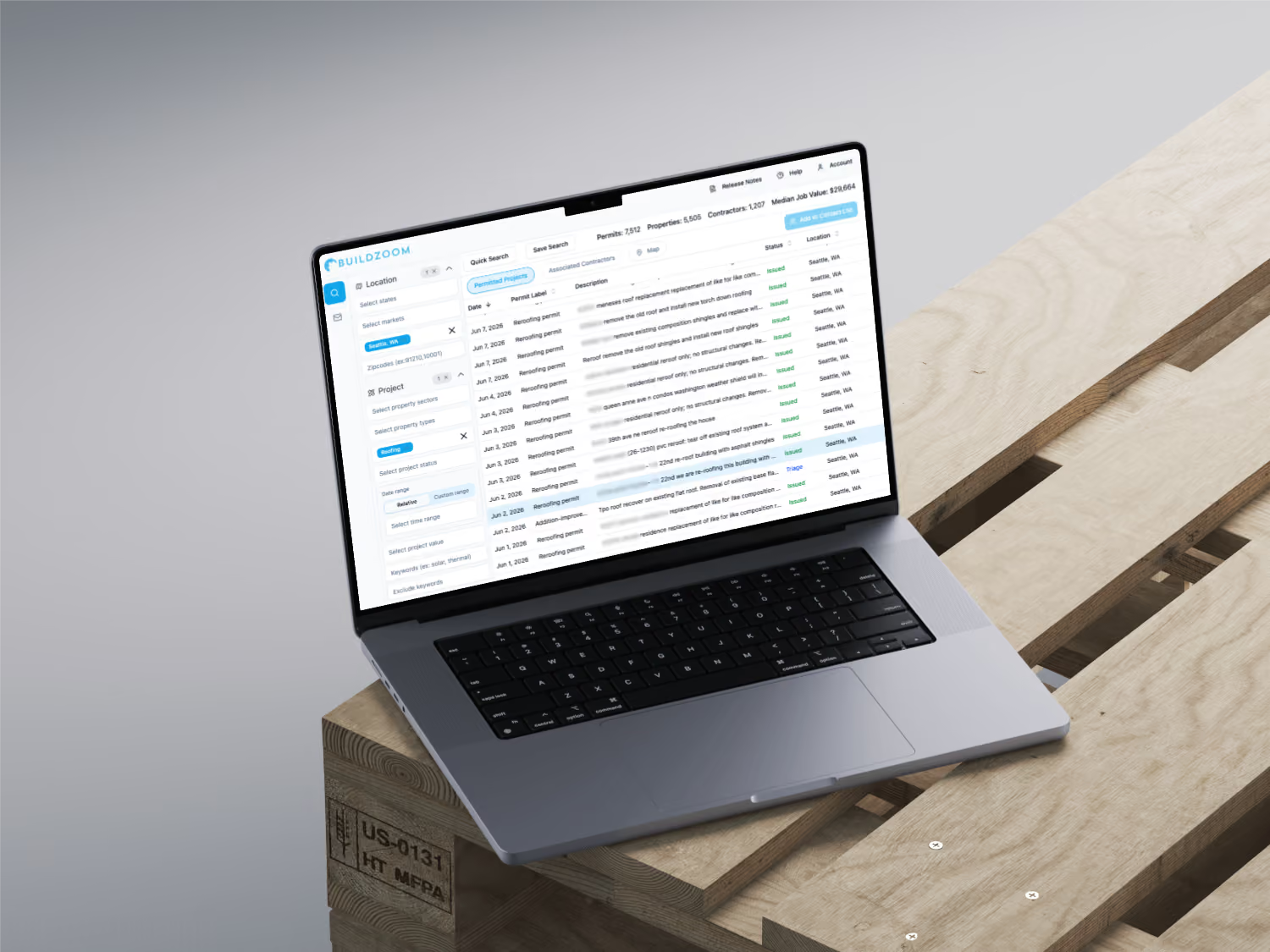
Better market comparison
Compare construction activity across locations, project types, property segments, and time periods.
Stronger research context
Connect permit activity with contractors, properties, project details, status, timing, and jurisdiction-level signals.
Construction signals that can support research and analysis.
Review historical and recent permit activity tied to project type, property, contractor, date, and location.
Study construction, renovation, repair, solar, roofing, HVAC, electrical, plumbing, additions, and other work categories.
Analyze construction activity across local markets, permitting authorities, and geographic areas.
Review contractor permit volume, project history, license-related signals, and market presence where available.
Understand improvement activity, additions, renovations, repairs, and other changes tied to property records.
Study applied, issued, completed, expired, cancelled, or updated permit activity where available.
Ways research and academic teams use Gryd
Property Risk Intelligence
Use permit history, property changes, contractor activity, and project records to understand how a property has changed over time.
Analysis & Data Modeling
Add permit, property, contractor, license, and project signals to models, dashboards, forecasts, reports, and analytics workflows.
Nationwide Permit Coverage
Access broad permit activity across markets and jurisdictions without relying on local searches one by one.
Construction Activity Monitoring
Track recent permit activity, project updates, contractor movement, property improvements, and market changes over time.
Technology Integration
Bring verified construction intelligence into products, platforms, workflows, dashboards, AI tools, and internal systems.
Use Gryd in the way your team works
Some teams need a searchable platform. Others need data connected to their systems. Others need large-scale files for analysis, modeling, or research. Gryd gives teams flexible ways to access verified construction intelligence.
Explorer
Search, filter, and monitor permit, property, contractor, and project activity through a web-based platform.
API
Connect Gryd data to your product, platform, model, dashboard, workflow, or internal system.
Bulk Data
Receive large-scale construction, permit, property, and contractor data for analysis, reporting, modeling, or research.
A comprehensive construction dataset for studying real market activity.
Research teams need data that is broad enough to compare markets, deep enough to study history, and structured enough to support analysis.
Gryd brings together permit, property, contractor, license, and project activity data so research teams can study construction activity across markets without building the data infrastructure from scratch.
Ready to use construction data for research and analysis?
Tell us what you're studying, which markets matter, and what kind of data your team needs. We'll help you find the right Gryd access path.
Research & Academia FAQs
Question
Answer
How can permit data support academic research?
Permit data can help researchers study housing supply, construction trends, renovation activity, permitting timelines, energy adoption, market change, and local economic development.
Can Gryd provide historical construction data?
Yes. Gryd can support teams that need historical permit, property, contractor, and project activity data for research, analysis, modeling, or reporting.
Can researchers access data in bulk?
Yes. Bulk Data is often the best fit for research teams that need large datasets for academic studies, market analysis, policy work, or consulting projects.
Can Gryd data be used for housing market research?
Yes. Gryd data can help teams study construction activity, property improvements, permitting patterns, renovation trends, and market-level changes tied to housing.
Can Gryd support energy or sustainability research?
Gryd may support research into solar, HVAC, electrification, battery storage, and other improvement categories where those signals are available in permit and project records.
Can we explore the data before requesting bulk delivery?
Yes. Explorer can help teams review the data directly before deciding whether Bulk Data or the API is the right fit.