Monitor construction activity with a single source of truth.

Gryd by BuildZoom Data helps teams use verified permit, property, contractor, and project data to understand what work was permitted, when it happened, who was involved, and how a property may have changed over time.
Use Gryd to support underwriting, lending, claims, fraud review, portfolio analysis, and property risk decisions with clearer construction activity signals.
Property risk changes when the property changes.
A property is not static. Roofs get replaced. Solar gets installed. HVAC, electrical, and plumbing systems are updated. Renovations, additions, repairs, and new construction can change how a property should be reviewed. The problem is that many of these changes are not easy to see in standard property records. Some teams rely on self-reported updates, old inspection data, incomplete property profiles, or manual searches across local permit portals.
Gryd helps teams see documented construction activity tied to a property, so they can review risk with more context.
Property records can be stale
Important improvements may not show up in the systems your team already uses.
Manual permit searches do not scale
Checking local records one property at a time slows down underwriting, lending, claims, and portfolio workflows.
Improvements can be undeclared
Renovations, additions, roof work, solar, HVAC, electrical, or plumbing updates may not be reflected in existing records.
Risk models need better context
Property-level decisions are stronger when they include documented construction activity, not just static property attributes.
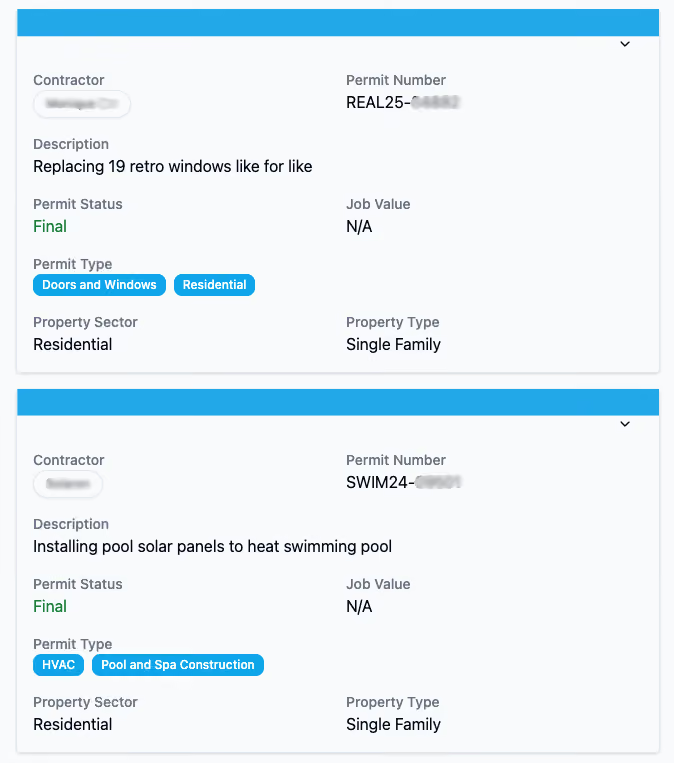
Gryd helps teams understand what work was permitted, where it happened, when the record changed, and which contractor was connected to the project where available.

Tell us what you need to understand
Review permit history for roofing, solar, HVAC, electrical, plumbing, additions, remodels, repairs, and other permitted work.
Understand improvement timelines
See when work was applied for, issued, updated, completed, expired, or cancelled where that status is available.
Identify potential risk blind spots
Find property changes that may not appear in standard records, customer-provided updates, or older inspection data.
Add contractor context
Review contractor activity, project history, market presence, and license-related signals where available.
Support portfolio review
Analyze permit and property change signals across books of business, loan portfolios, markets, or property groups.
Reduce manual research
Give teams a cleaner way to review construction activity without searching local portals one by one.
Construction signals that can support research and analysis.
Review past and recent permit activity tied to a property, project type, contractor, location, and date.
Use permit records to help confirm when roof work was permitted or updated.
Identify solar-related permits and related project details where available.
Review permitted system updates that may affect property condition or risk review.
See improvement activity that may change property use, value, condition, or exposure.
Review who was connected to the work, activity history, and license-related signals where available.
Make property decisions with more complete context.

Better risk visibility
See property changes that may be missing from standard records or older data sources.
Faster review workflows
Reduce the time teams spend searching local permit portals and stitching records together manually.
Stronger underwriting and lending context
Use construction activity to support risk review, rate adequacy, loan monitoring, credit workflows, or property analysis.
More useful portfolio analysis
Review property changes across markets, jurisdictions, books of business, or large property sets.
Built for teams that rely on construction and property signals.

Insurance & Underwriting
Use permit history and property improvement signals to support underwriting, renewal review, claims, fraud, portfolio analysis, and rate adequacy.

Financial Services & Lending
Use construction activity, project records, and contractor signals to support lending, construction loan monitoring, KYB, credit review, and property risk workflows.

Real Estate and Property Tech
Use permit and improvement history to enrich property profiles, improve market intelligence, and add construction context to property decisions.

Research & Academia
Use property change and permit history to study renovation trends, housing activity, rebuilding, energy adoption, and market change.
Use Gryd in the way your team works
Some teams need a searchable platform. Others need data connected to their systems. Others need large-scale files for analysis, modeling, or research. Gryd gives teams flexible ways to access verified construction intelligence.
Explorer
Search, filter, and monitor permit, property, contractor, and project activity through a web-based platform.
API
Connect Gryd data to your product, platform, model, dashboard, workflow, or internal system.
Bulk Data
Receive large-scale construction, permit, property, and contractor data for analysis, reporting, modeling, or research.
Other ways teams use Gryd for risk and verification.
Analysis & Data Modeling
Add permit, property, contractor, license, and project signals to models, dashboards, forecasts, reports, and analytics workflows.
Contractor Verification
Review contractor activity, permit history, license-related signals, project records, and market presence.
Technology Integration
Bring verified construction intelligence into products, platforms, workflows, dashboards, AI tools, and internal systems.
Construction Lead Generation
Find active projects, high-volume contractors, and better-timed sales opportunities using verified construction activity.
Property Risk Intelligence FAQs.
Question
Answer
What is property risk intelligence?
Property risk intelligence is the use of property, permit, contractor, and construction activity data to better understand how a property has changed and what those changes may mean for risk review.
How can permit data help with property risk?
Permit data can show documented construction activity, such as roof work, renovations, additions, solar installs, HVAC updates, electrical work, plumbing work, and other property improvements.
Can Gryd help identify undeclared improvements?
Gryd can help teams review permit history and property change signals that may point to improvements not reflected in existing records, policy data, loan files, or property profiles.
Can property risk intelligence support underwriting?
Yes. Teams can use permit history, property changes, contractor activity, and project details to add more context to underwriting, renewal, claims, fraud, and portfolio workflows.
Can lenders use property risk intelligence?
Yes. Lending teams can use construction activity, project records, contractor signals, and permit history to support property review, construction loan monitoring, credit workflows, and portfolio analysis.
Is this only for individual property lookups?
No. Teams can use Gryd for direct property research through Explorer, system integration through API Access, or large-scale portfolio analysis through Bulk Data.
Ready to see property risk with better construction context?
Tell us what properties, markets, or workflows your team needs to understand. We'll help you find the right way to use Gryd data.