How FEMA's Changing Flood Insurance Policies Make Property Histories More Critical Than Ever

Gryd by BuildZoom Data
How FEMA's Changing Flood Insurance Policies Make Property Histories More Critical Than Ever
Article
Why accurate, accessible building permit records are vital in the new flood insurance era
Overview
As climate risks intensify and FEMA rolls out significant changes to the National Flood Insurance Program (NFIP) under Risk Rating 2.0, both private insurers and public institutions must rethink how they assess, price, and manage flood risk. One of the most underutilized tools in this equation is the building permit: a verified, historical record of physical improvements made to a property.
In an era where premiums are tied more closely to structure-specific risk factors, access to detailed permit histories has never been more essential. This article explores why, and how, platforms like Gryd are becoming indispensable to insurers, lenders, and property stakeholders navigating the evolving flood insurance landscape.
FEMA's Risk Rating 2.0: A Structural Shift in Flood Insurance Pricing
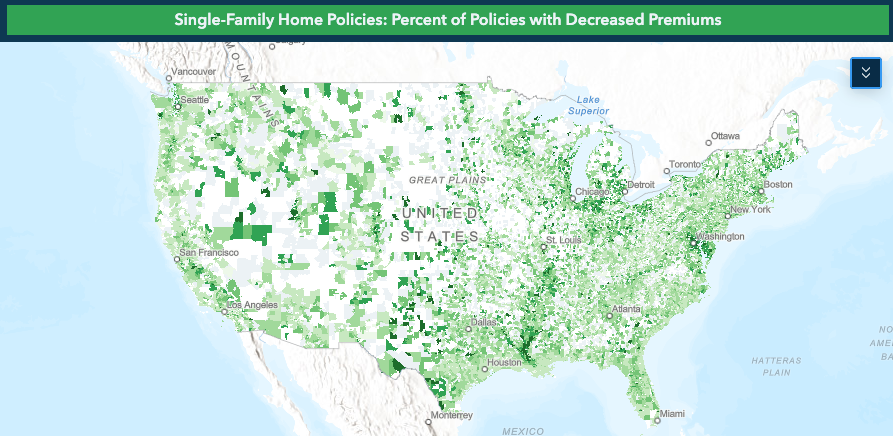
As of April 1, 2023, FEMA has fully implemented the National Flood Insurance Program’s (NFIP) pricing approach, Risk Rating 2.0., a major overhaul of how flood insurance premiums are calculated. Instead of relying solely on outdated Flood Insurance Rate Maps (FIRMs), the new model uses property-specific characteristics such as:
- Foundation type
- Elevation relative to base flood elevation
- Construction materials
- Distance to flooding sources
- First-floor height
(Source: FEMA, Risk Rating 2.0: Equity in Action)
This means two houses on the same block could now pay dramatically different premiums, depending on their construction and elevation—even if they are in the same flood zone.
Why Property History and Improvements Now Directly Impact Premiums
Before Risk Rating 2.0, structural upgrades like retrofitted foundations or new elevation platforms often went unnoticed in FEMA's legacy system. Now, those details directly affect insurance rates.
Yet there's a problem:
Most insurers and underwriters don't have ready access to up-to-date or historical construction data on a property. That's where building permit data plays a critical role.
The Underestimated Value of Building Permit Data
Permits provide a verified, government-issued record of:
- Renovations and additions
- Elevation modifications
- Foundation replacements or reinforcements
- Structural retrofits (e.g., hurricane clips, drainage systems)
- Mechanical, plumbing, or electrical updates
Unlike MLS listings or appraisals—which may be incomplete or outdated-permits are timestamped and filed with local jurisdictions, making them far more trustworthy for underwriting and risk modeling.
For example, a home retrofitted with a raised foundation post-Hurricane Harvey could now qualify for significantly lower flood insurance rates—but only if the insurer knows the upgrade occurred. Permit data surfaces this insight instantly.
The Cost of Missing Permit History
Without access to permit records, insurers may:
- Overprice premiums, pushing policyholders toward competitors
- Miss unpermitted improvements that increase risk (e.g., basement conversions)
- Underestimate the replacement cost of a structure
- Face increased fraud exposure during post-flood claims.
For lenders and real estate professionals, this lack of visibility may lead to:
- Undiscovered flood vulnerabilities during due diligence
- Delayed closings due to missing elevation certificate data
- Inaccurate property valuations tied to unrecorded improvements
How Gryd Leads the Way
Gryd offers the largest, most reliable national database of building permit records, with:
- Over 400 million records and growing
- Clean, standardized data from thousands of municipalities
- Advanced tools for filtering by job type, valuation, contractor, and more
- Scalable delivery for enterprise insurance, lending, and risk intelligence teams
The Stakes Are Rising
As FEMA’s policies become more nuanced and climate volatility increases, every stakeholder involved in a property transaction—from insurers and reinsurers to lenders and adjusters—needs deeper structural intelligence to make informed decisions.
Permit data is no longer a “nice-to-have.” It’s a mission-critical dataset for accurate flood insurance pricing, risk mitigation, and underwriting transparency. And Gryd is the most robust and reliable partner to help institutions harness its power.
Get A Free Data Sample or Request A Consult


Ready to use verified construction intelligence in your industry?
Tell us what your team needs to understand, which markets matter, and how you want to use Gryd data. We’ll help you find the right path.